People
Research at IDeaLS Lab is driven by a multidisciplinary and international community of PhD students, postdoctoral researchers, research assistants, students, academic collaborators, and industrial partners.
Over the years, Dr. Panichella has supervised or co-supervised researchers at different career stages, including PhD students, MSc and undergraduate students, postdoctoral researchers, and research assistants.
We believe that excellent research grows from collaboration, curiosity, scientific rigor, openness, and the freedom to explore challenging questions.
Team · Head of Lab
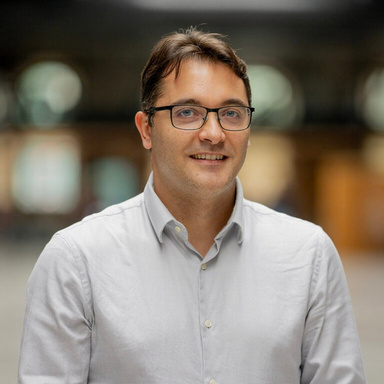
Dr. Sebastiano Panichella
Sebastiano Panichella is Head of the IDeaLS Lab (Intelligent Development and Large-Scale Systems Lab) at AI4I – Italian Institute of Artificial Intelligence for Industry, the national AI center established by the Italian Government.
His research focuses on computer science research for AI-enabled and cyber-physical systems, with particular emphasis on testing, validation, DevOps/MLOps, and trustworthy autonomy in safety-critical domains such as robotics, autonomous vehicles, UAVs, smart cities, and life sciences.
He has authored over 100 peer-reviewed publications in leading venues including ICSE, FSE, ASE, ICST, TOSEM, and EMSE, receiving multiple Best Paper and Most Influential Paper awards. He has coordinated and co-led national and European projects funded by Horizon Europe, SNF, Innosuisse, and the Hasler Foundation, securing more than CHF 3.5 million in competitive funding.
Consistently recognized among the top researchers worldwide in Software Engineering and AI-enabled systems, including the Stanford University Top 2% Scientists ranking and ScholarGPS Top Scholars recognition.
Team
PhD Students
PhD Researcher · University of Bern
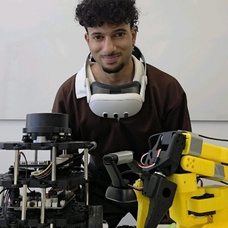
Prakash Aryan
Prakash Aryan is a PhD researcher in the Software Engineering Group at the University of Bern and a contributor to the IDeaLS Lab. His research focuses on safety-aware MLOps for robot swarms and human–AI collaboration in embodied systems. He develops methods for integrating multimodal human sensing into the lifecycle of robotic and autonomous systems, from simulation and deployment to recovery. His work explores trustworthy autonomy and human–robot interaction in large-scale, safety-critical systems operating under uncertainty.
Research Fellows
Research Fellow · AI4I
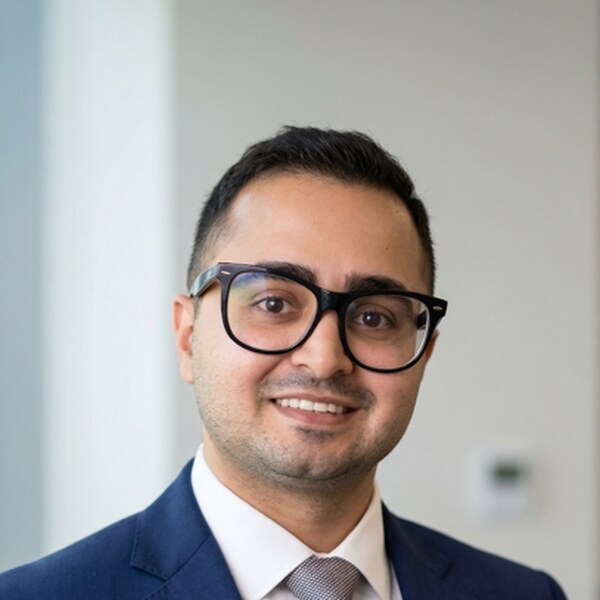
Yahya Momtaz
Yahya Momtaz is a Research Fellow at the IDeaLS Lab, AI4I. His research focuses on the reliability and evaluation of AI and software testing. He develops machine learning and AI systems for use in scientific fields, as well as deploying applications and models in the cloud. His work focuses on making research results accessible to users through reliable software.
Research Fellow · AI4I
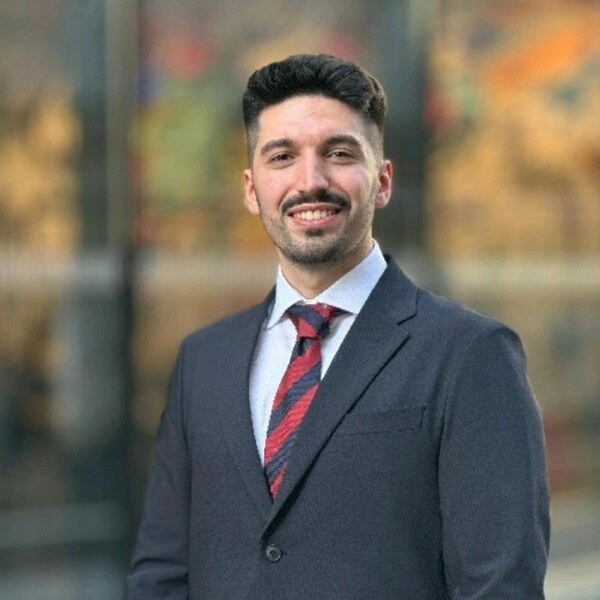
Roberto Riccio
Roberto Riccio is a Research Fellow at the IDeaLS Lab, AI4I. His research focuses on the safety and reliability of heterogeneous robot swarms operating under Vision-Language-Action (VLA) policies. He develops methods to characterize how multimodal perceptual uncertainty propagates and aggregates within robotics and autonomous systems. His work investigates the relationship between uncertainty and unsafety, as well as methods for reliably transferring and validating such systems from simulation to real-world deployment. A particular focus of his research is search-and-rescue applications, where safety, robustness, and reliable decision-making are critical.
Research Fellow · AI4I
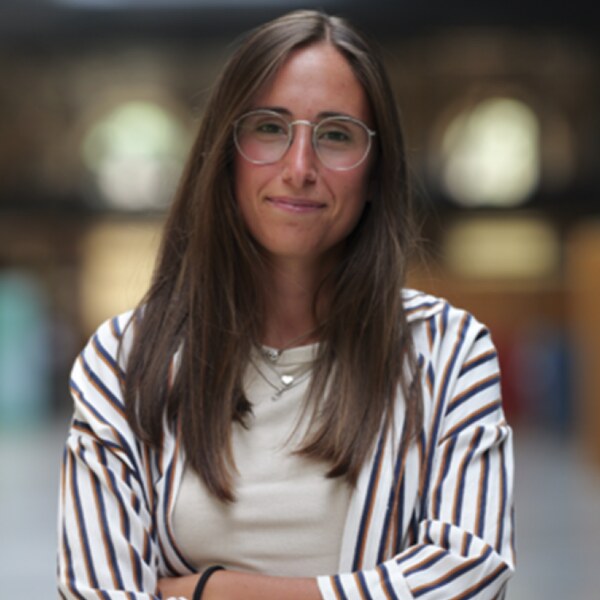
Claudia Ceci
Claudia Ceci is a Research Fellow at the IDeaLS Lab, AI4I. Her research focuses on simulation-driven control for surgical robotics, with an emphasis on bridging perception, decision-making, and actuation. She develops digital twin and reinforcement learning approaches to design safe and robust control policies for robot–tissue interaction, with the goal of advancing trustworthy autonomy in surgical robotic systems.
Research Fellow · AI4I
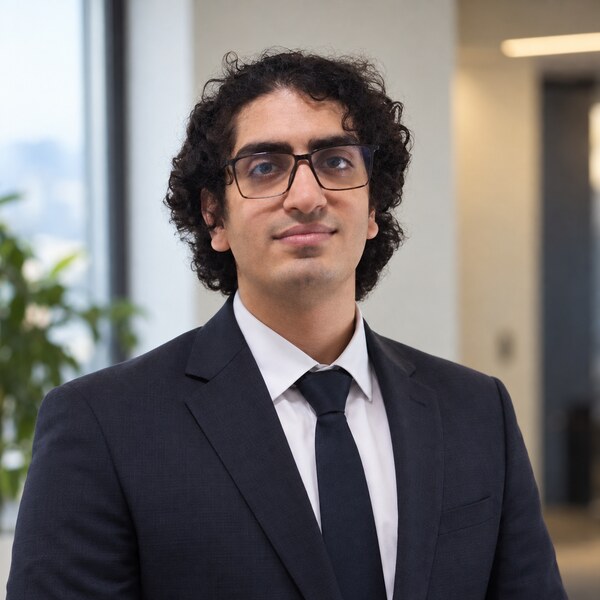
Mohammad Sabouri
Mohammad Sabouri is a Research Fellow at the IDeaLS Lab, AI4I. His research focuses on the safety, reliability, and uncertainty of AI-enabled robotic and autonomous systems. His work combines control theory, system modelling, simulation, and learning-based methods to study robust and dependable autonomous behavior. His research spans complex dynamical and cyber-physical systems, including autonomous underwater vehicles and mobile robots, with a focus on reliable operation in uncertain real-world environments.
Research Fellow · AI4I
Shaihan Syed
Shaihan Syed is a Research Fellow at the IDeaLS Lab, AI4I. His research focuses on intelligent and cooperative robotics, particularly humanoid and quadruped systems. He develops decentralized coordination methods and explores intelligent robots that can adapt to complex tasks and terrains. His interests also include neural signal processing and human–machine interaction.
Network
External Researchers
Postdoctoral Researcher · University of Bern
Christian Birchler
Christian Birchler is a postdoctoral researcher in the Software Engineering Group at the University of Bern and member of the IDeaLS Lab. His work focuses on software engineering for autonomous and cyber-physical systems, with emphasis on search-based and ML-driven regression testing in large-scale simulation environments. He develops methods and tools—such as SDC-Scissor—for optimizing testing and validation of autonomous driving systems in virtual environments. His research contributes to the lab’s goals of improving the dependability and efficiency of AI-enabled systems through scalable, data-driven testing strategies.
eHealth AI Researcher · University of Bern
Sarah Rebecca Meyer
Sarah Rebecca Meyer is a researcher in eHealth AI at the University of Bern and member of the IDeaLS Lab. Her work bridges medical informatics, veterinary medicine, and machine learning, with a focus on AI-driven clinical decision support and predictive modeling in life sciences. She develops LLM-based methods for structuring complex clinical datasets and applies machine learning to high-impact problems such as anesthesia risk assessment and neonatal care prediction. Her research strengthens the lab’s mission of translating AI methods into dependable, domain-aware systems for healthcare applications.
MSCA PhD Researcher · University of Bern
Erdem Uysal
Erdem Uysal is a Marie Skłodowska-Curie PhD researcher at the University of Bern and member of the IDeaLS Lab. His research focuses on the safety and robustness of embodied AI systems, particularly in autonomous driving and robotics. He investigates adversarial vulnerabilities and mitigation strategies for AI systems operating in complex real-world environments. His prior work includes pedestrian behavior prediction and industrial ADAS development at Mercedes-Benz. His current work advances trustworthy autonomy through robustness-aware design and evaluation of AI-enabled cyber-physical systems.
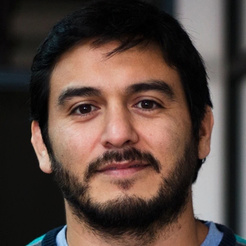
PhD Researcher · University of Bern
Pablo Valenzuela
Pablo Valenzuela is a PhD researcher in Software Engineering at the University of Bern and collaborator in the IDeaLS Lab. His research focuses on empirical software engineering, mining software repositories, and AI-driven software analytics. He studies the evolution of software ecosystems and develops intelligent techniques to support software maintenance, comprehension, and evolution at scale. His work on AI-assisted software engineering and MLOps contributes to the lab’s vision of building dependable and explainable AI-enabled software systems.
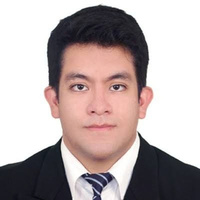
PhD Researcher · University of Bern
Sandro Hernández Goicochea
Sandro Hernández Goicochea is a PhD researcher in Software Engineering at the University of Bern and member of the IDeaLS Lab. His research focuses on green software engineering and energy-aware AI systems, with emphasis on measuring and modeling energy consumption in software workflows such as CI/CD pipelines and simulation-based testing. He investigates how software design, hardware configuration, and workload characteristics influence energy efficiency. His work supports the development of sustainable, resource-efficient intelligent systems for large-scale AI and cyber-physical applications.